
filip
May 14, 2026
The April 28, 2025 Spain Blackout: A
Wake-Up Call for ADMS and DERMS
On April 28, 2025, the Iberian power system experienced a large-scale blackout that unfolded in less than two minutes, leaving millions without electricity across Spain and Portugal.
What makes this event particularly important is not just its scale, but its nature. It was a systemic collapse: fast, complex, and deeply tied to how modern power systems are evolving. In many ways, it offers a clear preview of the challenges ahead.
Leading up to the event, the system was operating under conditions that are becoming increasingly common: a high share of renewable generation, particularly solar, and a reduced presence of conventional synchronous generators. This combination changes the physics of the grid. It reduces inertia, tightens stability margins, and increases reliance on control systems.
When a disturbance occurred, a system this sensitive could not absorb the oscillations – they escalated. Protective systems began disconnecting assets. Generation was lost rapidly; around 60% within seconds. The system could not recover. Frequency and voltage moved beyond acceptable limits, and the grid collapsed
The Iberian blackout wasn’t a failure of energy capacity, but a failure of coordination speed. Because this all happened faster than operators could realistically respond, it serves as a stark reminder: the grid of the future cannot be managed manually. If control isn’t automated via ADMS and DERMS, stability is just an illusion.
The system did not fail because it lacked generation. It failed because it lacked coordinated control. Modern grids are no longer stabilized by the inherent properties of large synchronous machines. Instead, stability must be actively managed, especially in systems with a high penetration of inverter-based resources.
In this event, distributed energy resources were present, but not orchestrated. Instead of supporting the system, they either disconnected or continued operating independently.
As grids are increasingly reinforced with flexibility assets – such as batteries, advanced controllers, and grid-forming technologies – to improve stability and capability, they also become significantly more complex, making ADMS and DERMS essential for managing that complexity from a digital control perspective.
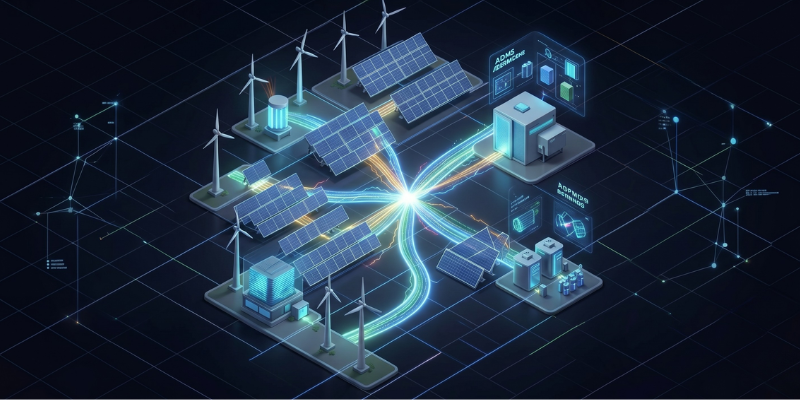
Advanced Distribution Management Systems (ADMS) provide real-time monitoring, analysis, and control of the distribution network. Distributed Energy Resource Management Systems (DERMS) extend this by integrating and orchestrating DERs as active participants. Together, they form the foundation for a grid that can respond dynamically to disturbances, rather than simply reacting after the fact.
As renewable penetration grows and grids become more decentralized, stability will depend less on physical infrastructure and more on digital control.
Because in the grid of the future, having energy is not enough – control is what keeps the lights on.
Comments are closed